
What’s New
Responsible Business Conduct with OECD Guidelines for Multinational Enterprises
Responsible Business Conduct with OECD Guidelines for Multinational Enterprises
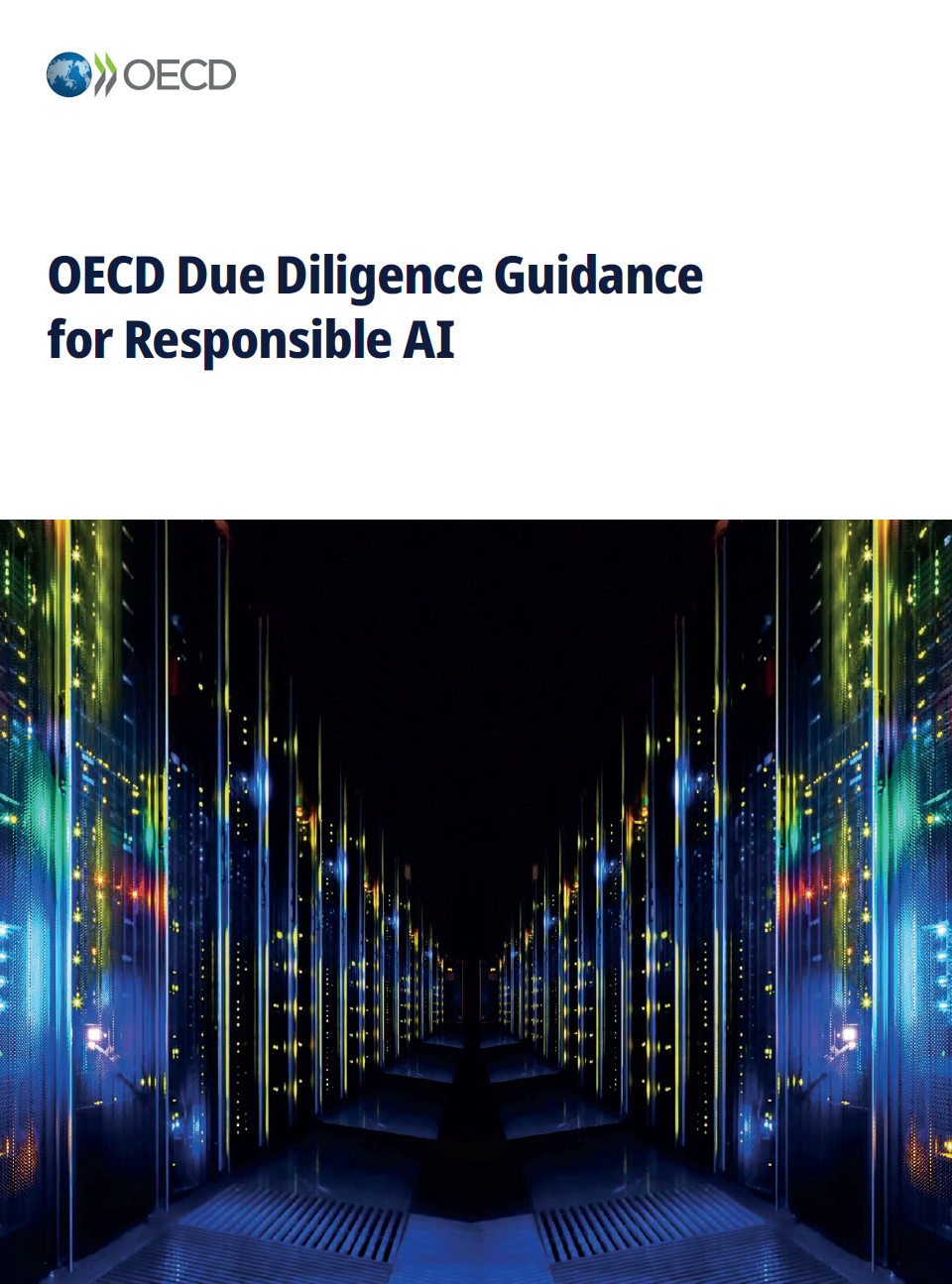
OECD ❛ Due Diligence Guidance for Responsible AI ❜ , issued by the OECD on 19 February 2026, provides a practical framework for enterprises to identify, prevent, mitigate, and address risks arising from the development and use of AI systems, while promoting trustworthy and human-centred AI. It builds upon the OECD AI Principles and the OECD Guidelines for Multinational Enterprises on Responsible Business Conduct (MNE Guidelines).
The Guidance integrates the OECD AI Principles with the OECD’s Responsible Business Conduct (RBC) due diligence framework, encouraging enterprises to proactively manage AI-related risks while fostering innovation and sustainable growth.
The Guidance applies broadly to enterprises involved throughout the AI ecosystem, including:
The OECD outlines a six-step RBC due diligence framework for responsible AI governance:
The Guidance emphasizes that due diligence should be an ongoing, iterative, and risk-based process.
Meaningful stakeholder engagement — including workers, affected communities, civil society, and end users — is presented as a core component of trustworthy AI governance. The Guidance also highlights the importance of transparency, explainability, traceability, and accountability throughout the AI system lifecycle.
The OECD stresses that responsible and trustworthy AI is not merely a matter of regulatory compliance, but increasingly a prerequisite for market access, investment, and global competitiveness. Enterprises that proactively integrate AI risk management into their governance systems may strengthen consumer trust, improve resilience, and gain advantages in international markets.
The Guidance is expected to serve as a practical reference for Korean enterprises, policymakers, industry associations, and stakeholders seeking to align with evolving international standards on AI governance and responsible business conduct. It may also support companies responding to emerging global AI regulations and supply chain due diligence requirements.
As part of its efforts to promote OECD standards and publications in Korea, the Korean NCP has undertaken translation projects, including the Korean translation of this Guidance.
OECD (2026), OECD Due Diligence Guidance for Responsible AI, OECD Publishing, Paris, https://doi.org/10.1787/41671712-en.